






Indigenous Journalists Bringing REDD+ Messages to Communities Through Their Reporting
 समीर बलामी
२०८३ आषाढ २३,मंगलवार ०९ : ०१ PM
समीर बलामी
२०८३ आषाढ २३,मंगलवार ०९ : ०१ PM
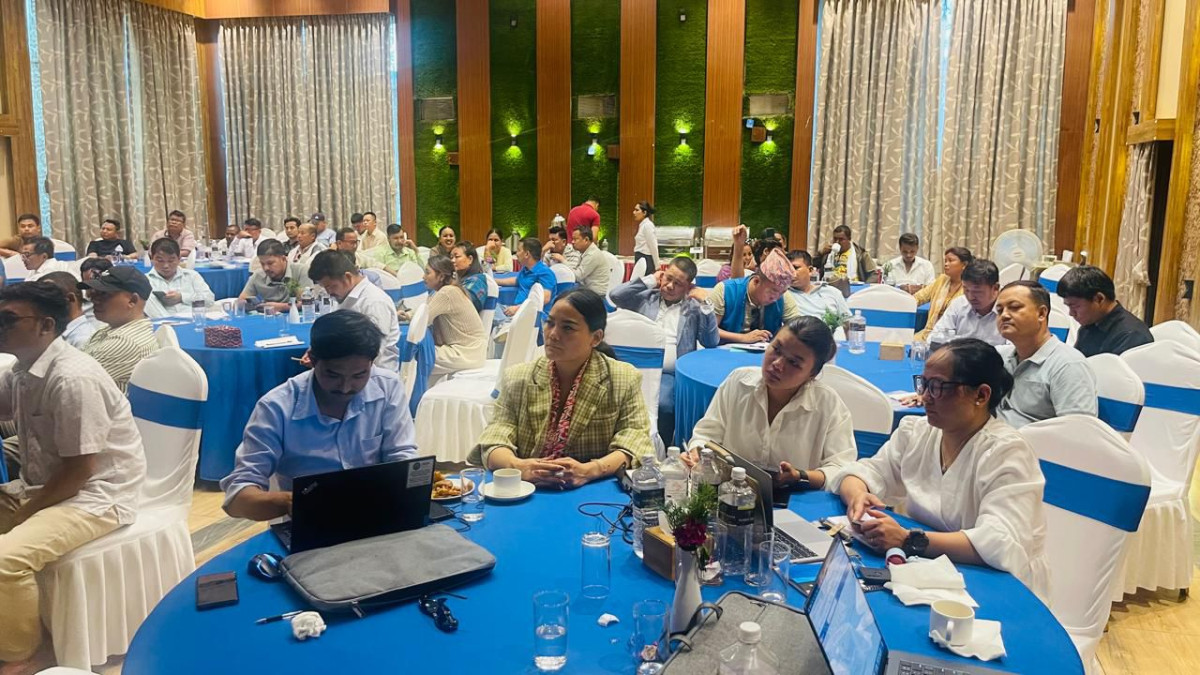
Simara, Nepal – Topics such as REDD+, carbon benefit sharing, forest governance, and climate change, which were once largely unfamiliar to Indigenous Peoples and Local Communities (IPLCs), are now increasingly being discussed within their communities. A key driver of this growing awareness has been Indigenous journalists. Following a capacity-building training, they have begun disseminating information through Indigenous language journalism, local media outlets, and news reporting, helping communities better understand forest conservation, climate action, and their rights and opportunities.
A three-day Capacity-Building Training and Provincial Workshop, organized by the Federation of Nepal Indigenous Nationalities Journalists (FONIJ) with financial support from the Dedicated Grant Mechanism (DGM) Nepal Project under RRN, was held in Simara, Bara District. Participants shared that the training introduced important new dimensions to Indigenous journalism.
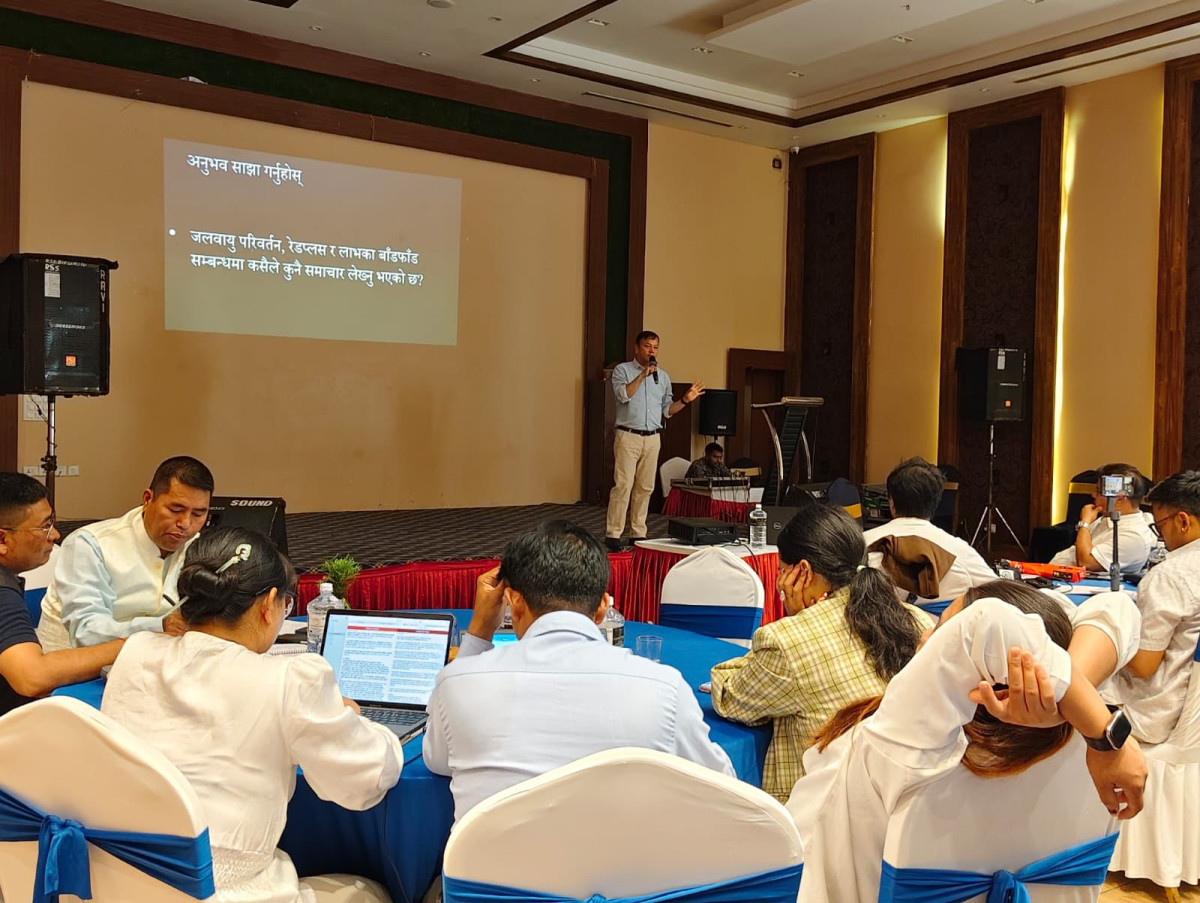
Before the training, many journalists had limited knowledge of subjects such as REDD+, carbon markets, carbon benefit-sharing mechanisms, forest governance, and climate justice. After participating, they have started producing news reports, feature stories, and analytical articles that connect these issues directly with the everyday concerns and rights of Indigenous Peoples and Local Communities.
More than one hundred Indigenous journalists from Madhesh Province and Lumbini Province participated in the program. In addition to strengthening their professional journalism skills, the training provided practical knowledge on natural resource management, forest conservation, climate change, carbon emission reduction, REDD+, and the rights of Indigenous communities. Participants also enhanced their skills in news writing, investigative reporting, feature writing, and community-based journalism.
Following the training, participating journalists have begun publishing and broadcasting stories through local newspapers, online news portals, community radio stations, and Indigenous language media. Their reporting highlights REDD+, forest conservation, carbon benefit-sharing mechanisms, and the vital role of Indigenous communities in sustainable forest management. As a result, communities are increasingly recognizing that forest conservation is not only an environmental issue but also one closely linked to livelihoods, Indigenous rights, climate justice, and economic opportunities.
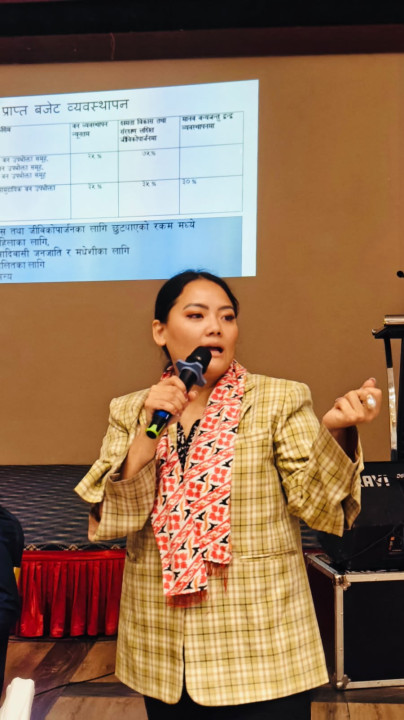
The training featured sessions led by experts on the history of Indigenous journalism, Indigenous language media, proposal and report writing, investigative journalism, feature writing, forest policies, REDD+, carbon management, benefit-sharing systems, natural resource governance, and the rights of Indigenous Peoples. Participants also practiced producing evidence-based journalism, prioritizing community voices, and communicating complex forest and climate policies in clear and accessible language.
One of the most significant outcomes of the training is the shift in journalists' perspectives. Rather than viewing forest conservation solely as an environmental topic, participants now understand it as an issue closely connected to Indigenous rights, traditional knowledge, sustainable livelihoods, economic opportunities, and social justice. This broader perspective is expected to contribute to bringing Indigenous issues further into Nepal's mainstream media discourse.
The program also included group exercises, investigative reporting practices, communication strategy development, and practical sessions on news and feature writing. Participants engaged in extensive discussions on forest management, REDD+, carbon emission reduction, sustainable forest management, forest governance, benefit-sharing systems, and Indigenous Peoples' rights over natural resources. According to the organizers, these activities significantly strengthened participants' subject knowledge and reporting capacity.
Journalists reported that the news stories produced after the training have already initiated meaningful discussions within local communities about REDD+, forest conservation, and carbon benefit-sharing. They noted that reporting in Indigenous languages has been particularly effective in reaching remote and forest-dependent communities, where access to technical information has often been limited.
Participants emphasized that the program not only enhanced their professional journalism skills but also strengthened Indigenous language journalism. It has laid a stronger foundation for evidence-based and investigative reporting on forest conservation, sustainable natural resource management, climate change, and the rights of Indigenous Peoples.
The program concluded with a strong message that successful forest conservation depends on meaningful community participation, recognition of Indigenous rights, and access to reliable information. It demonstrated that when Indigenous journalists gain a deeper understanding of these issues, they produce informed and impactful reporting. As those stories reach communities, Indigenous Peoples and Local Communities become better informed about REDD+, carbon benefit-sharing, forest conservation, and the opportunities and rights associated with them. Sustaining these efforts is expected to further strengthen public awareness of forest conservation, climate justice, and the rights of Indigenous Peoples across Nepal.
समीर बलामी
२०८३ आषाढ २३,मंगलवार ०९ : ०१ PM







Filmyfanda
Balaju-16, Kathamandu
News : 01-4420728/9851162384
Email : [email protected]
Advertisement : 9801062384
Email : [email protected]
सूचना विभाग दर्तां नं: 653/074-75९
Quick Links
Our Team
- Sameer Balami
- Urmila Sharma